
NeoGraft technique guide
NeoDHT, NeoPlatinum FUE & DHI — Which Hair Transplant Technique Is Right for You?
The names sound similar, but they describe different parts of hair transplantation. This doctor-led guide compares extraction, graft preservation and recipient-site placement so you can discuss the right workflow for your donor hair, hair-loss pattern and long-term plan.
First, simplify the terminology
Every hair transplant has three critical stages
A technique should be judged across the complete workflow—not by one device or marketing label. The condition of a graft is influenced from the moment it is separated from the donor area until it is placed into a planned recipient site.
Controlled extraction
Follicular units are released and removed from the donor area. Punch selection, rotation, depth control and the operator’s judgement affect avoidable transection and donor preservation.
Graft preservation
While follicles are outside the scalp, careful handling, an appropriate holding solution and an organised workflow help protect them from drying, heat and unnecessary time outside the body.
Site creation & placement
Recipient sites determine the planned angle, direction and distribution. Placement must respect graft size, scalp vascularity and the long-term design—not simply chase maximum density.
Side-by-side clarity
FUE, DHI, NeoPlatinum and NeoDHT compared accurately
There is no universal “best” name. The strongest plan is the one that matches diagnosis, donor capacity, graft number, hair characteristics, recipient-area needs and future hair-loss progression.
| Decision point | Standard FUE | DHI | NeoPlatinum FUE | NeoDHT |
|---|---|---|---|---|
| What the name describes | An extraction method: individual follicular units are removed with a punch. | Usually a placement workflow using an implanter pen; extraction is commonly FUE-based. | NeoGraft’s refined, doctor-led FUE workflow. | Neo Direct Hair Transplant: NeoGraft’s complete three-stage graft-protection protocol. |
| Extraction focus | Motor, punch, speed and operator technique vary by clinic. | DHI does not by itself define the extraction motor or punch. | Controlled low-RPM extraction with a lightweight nano-motor and refined punch approach. | Controlled low-RPM punch extraction planned around donor characteristics. |
| Graft care | Holding solution and time outside the scalp vary by clinic. | Workflow often aims for organised extraction-to-placement; details vary. | Structured, specialised graft handling while follicles are outside the scalp. | Dedicated graft-preservation medium with organised handling and managed time outside the scalp. |
| Recipient stage | Sites may be made with needles or blades; placement can be manual or pen-assisted. | Grafts are loaded into an implanter pen for recipient placement. | Planned recipient-site creation followed by controlled placement. | Fine sapphire recipient-site creation for planned angle, direction and distribution, followed by controlled placement. |
| Best understood as | The foundation used by many modern transplant workflows. | A placement approach—not automatically a superior or separate extraction technology. | The precision platform that improved NeoGraft’s extraction and handling workflow. | NeoGraft’s most comprehensive protocol across extraction, preservation and recipient-site creation. |
The engineering bridge
Why NeoPlatinum FUE still matters
NeoPlatinum was the pivotal move away from a generic FUE workflow. Its durable concept was controlled low-RPM nano-motor extraction combined with a more structured approach to protecting grafts outside the scalp. NeoDHT builds on that foundation; it does not erase it.
- Designed to reduce avoidable mechanical stress during extraction
- Organised handling from donor release to recipient placement
- Doctor-led planning rather than a device-only proposition
- A distinct treatment option after individual scalp and donor assessment
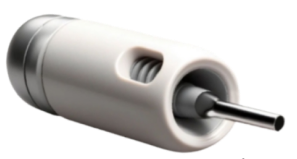
Neo Direct Hair Transplant
NeoDHT protects the workflow at all three stages
NeoDHT is not a hormone-blocking treatment and it is not another name for DHI. It is NeoGraft’s doctor-led FUE protocol for coordinated extraction, preservation and recipient-site creation.
Low-RPM punch control
The punch, rotation and depth are selected around follicle direction and donor characteristics to reduce avoidable graft and donor-area trauma.
Dedicated graft care
Follicles are handled in an organised sequence and kept in a specialised holding medium while outside the scalp.
Sapphire recipient sites
Fine sapphire blades are used to create planned recipient sites, with angle, direction and distribution tailored to the intended design.
Common questions
Choose the workflow, not the buzzword
Is DHI better than FUE?
Not automatically. FUE describes extraction; DHI describes pen-assisted placement. A safe, natural-looking plan depends on diagnosis, donor management, graft handling, recipient design and the team performing every stage.
What is the practical difference between NeoPlatinum FUE and NeoDHT?
NeoPlatinum is NeoGraft’s refined FUE platform built around controlled nano-motor extraction, structured handling and planned placement. NeoDHT builds on controlled extraction and adds a dedicated preservation medium plus fine sapphire recipient-site creation as a coordinated three-stage protocol.
Does NeoDHT block the DHT hormone?
No. NeoDHT means Neo Direct Hair Transplant. If native hair remains sensitive to dihydrotestosterone, medical management is a separate clinical decision made after diagnosis.
Can one technique guarantee graft survival or density?
No. Individual graft growth and cosmetic density vary with diagnosis, donor quality, graft handling, scalp factors, healing and aftercare. A consultation should establish realistic limits before surgery.
How will Dr. Nav Vikram recommend a technique?
The decision starts with the cause and grade of hair loss, donor density, hair calibre and curl, scalp health, recipient-area size, previous procedures, medical history and the likely progression of native-hair loss.
Your plan should start with diagnosis
Get a clear technique and graft plan before you decide
Book a scalp and donor assessment with Dr. Nav Vikram’s team in Chandigarh. You will receive an individual recommendation, realistic limitations and transparent cost guidance.
Hair transplantation is a medical procedure. Suitability, recovery, graft growth and cosmetic outcomes vary between patients.