
Hair Loss Protocol in Chandigarh
A Comprehensive Treatment by Dr. Nav Vikram
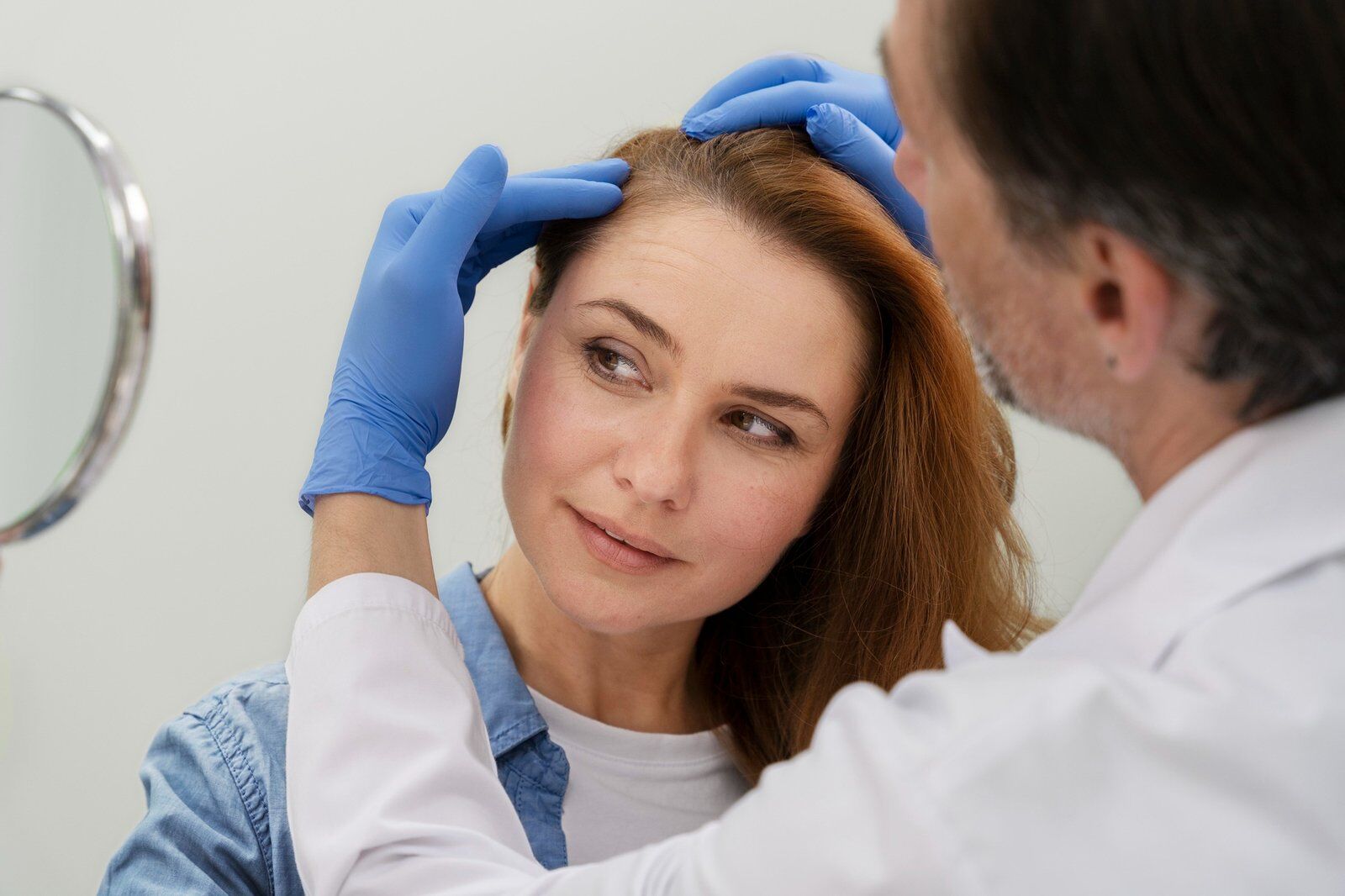
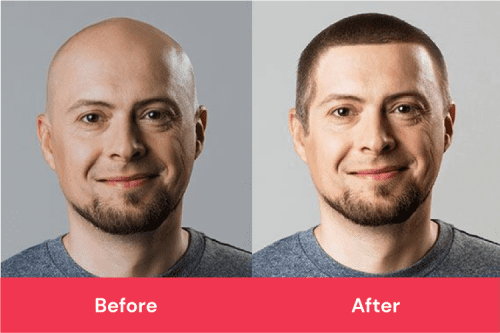
Hair loss is a widespread concern affecting millions globally. It often leads to reduced self-esteem, altered appearance, and impacts emotional well-being. Fortunately, with advancements in medical science, several effective treatments are now available.
Lifestyle Check
The first step of the Hair Loss Protocol involves a thorough assessment of an individual’s lifestyle. Factors such as stress levels, sleep patterns, and exercise routines are examined to identify any underlying causes contributing to hair loss. Stress, lack of sleep, and sedentary lifestyles can all have a negative impact on hair health. By addressing and modifying these lifestyle factors, individuals can create a more conducive environment for healthy hair growth.
Dietary Modifications
Nutrition plays a crucial role in maintaining overall health, including hair health. The Hair Loss Protocol emphasizes the importance of a balanced and nutrient-rich diet to support hair growth. Dr. Nav Vikram’s protocol involves identifying any deficiencies in essential vitamins, minerals, and proteins necessarily required for healthy hair. Based on the individual’s dietary assessment, specific dietary modifications are recommended to ensure optimal nutrient intake for hair health.
Medical Diagnosis Based on Condition
Each case of hair loss is unique, and identifying the underlying cause is vital for effective treatment. The Hair Loss Protocol involves a thorough medical diagnosis to determine the root cause of hair loss. This may include evaluating hormonal imbalances, scalp conditions, genetic factors, or other medical conditions that can contribute to hair loss. By conducting a comprehensive assessment, Dr. Nav Vikram can tailor the treatment plan to address the specific needs of each individual.
Medicines
Based on the diagnosis, Dr. Nav Vikram may prescribe medications to treat hair loss. These medications can range from topical solutions to oral medications, depending on the severity and underlying cause of the hair loss. The protocol ensures that the prescribed medications are safe, effective, and suitable for the individual’s condition.
Treatment
The Hair Loss Protocol offers a range of treatment options to combat hair loss effectively. These treatments may include laser therapy, growth factor -rich plasma (GFRP) therapy, hair transplantation, or other advanced procedures, depending on the severity and type of hair loss. Dr. Nav Vikram utilizes the latest techniques and technologies to provide personalized treatment plans tailored to each patient’s specific needs.
Maintenance of Desired Results
Achieving desired results in hair restoration is just the beginning. The Hair Loss Protocol emphasizes the importance of maintenance to ensure long-term success. Dr. Nav Vikram provides guidance on post-treatment care, including follow-up appointments, homecare routines, and lifestyle adjustments necessary to maintain healthy hair growth. This holistic approach to maintenance ensures that individuals can enjoy the benefits of their treatment for years to come.
Conclusion
The Hair Loss Protocol developed by Dr. Nav Vikram offers a comprehensive and ingenious approach to combat hair loss problems. By addressing lifestyle factors, implementing dietary modifications, conducting thorough medical diagnoses, prescribing appropriate medications, providing advanced treatments, and emphasizing long-term maintenance, this protocol aims to achieve lasting results for individuals struggling with hair loss.
If you’re experiencing hair loss, consulting with a qualified professional who follows the Hair Loss Protocol can provide you with a personalized treatment plan and help you regain your confidence with a fuller head of hair.
Dr. Nav Vikram’s first question at every consultation is: “Do you need a transplant, or can we save what you have?” The answer depends on a thorough scientific assessment of follicular viability. At NeoGraft Hair Clinic, Chandigarh, our structured hair loss treatment protocol has helped thousands of patients across Punjab and India arrest hair fall, regrow miniaturised hair, and — where surgery is appropriate — achieve permanent restoration.
Understanding Hair Loss — The Biology
Hair loss affects an estimated 85% of men by age 50 and 40% of women at some point in their lives (American Hair Loss Association). In India, the prevalence of androgenetic alopecia is among the highest in Asia — driven by a combination of genetic predisposition, hormonal factors, nutritional deficiencies, and environmental stress. Yet the majority of early-stage hair loss is reversible with the correct medical protocol, particularly when treatment begins before follicular miniaturisation becomes terminal.
The Hair Growth Cycle — Why Timing Matters
Each scalp hair follicle cycles independently through three phases:
- Anagen (growth): 2–6 years — follicle actively produces hair shaft
- Catagen (transition): 2–3 weeks — growth stops, follicle regresses
- Telogen (rest/shedding): 3–4 months — old hair sheds; new cycle begins
In androgenetic alopecia, DHT progressively shortens the anagen phase — causing follicles to produce finer, shorter hairs until they miniaturise and eventually become dormant. Medical treatment works by blocking DHT, extending anagen, and reactivating miniaturised follicles — but only while the follicle retains a viable dermal papilla. Once terminal, only transplantation can restore hair.
NeoGraft’s 3-Stage Hair Loss Treatment Protocol
Stage 1 — Precise Diagnosis (Week 1–2)
- Trichoscopy (dermoscopy): Identifies miniaturised vs. terminal follicles, follicular dropout patterns, perifollicular inflammation, and scalp conditions
- Blood panel: CBC, TSH, T3/T4, ferritin, serum zinc, Vitamin D3, Vitamin B12, DHT/testosterone levels, and hormonal profile (women)
- Scalp biopsy (when indicated): Differentiates scarring vs. non-scarring alopecia — critical for treatment planning
Research note: Ferritin levels below 40 ng/mL are associated with increased hair shedding in women (Trost et al., Journal of the American Academy of Dermatology, 2006). Vitamin D deficiency — extremely common in India despite high sun exposure — has been linked to alopecia areata pathogenesis via Vitamin D receptor polymorphisms (Elkady et al., 2016).
Stage 2 — Arrest Active Shedding (Month 1–3)
The immediate goal is to stop the progression of hair loss before further follicular miniaturisation occurs.
- Finasteride 1mg/day (men): Type II 5α-reductase inhibitor — reduces scalp DHT levels by 70% (Kaufman et al., NEJM, 1998). Clinical trials show 83% of men experience arrest of hair loss within 3 months; 66% show measurable regrowth at 12 months
- Topical Minoxidil 5% (men & women): Potassium channel opener / vasodilator — extends the anagen phase and increases follicular size. Effective in 40–70% of early-to-moderate stage cases (Headington, 1987)
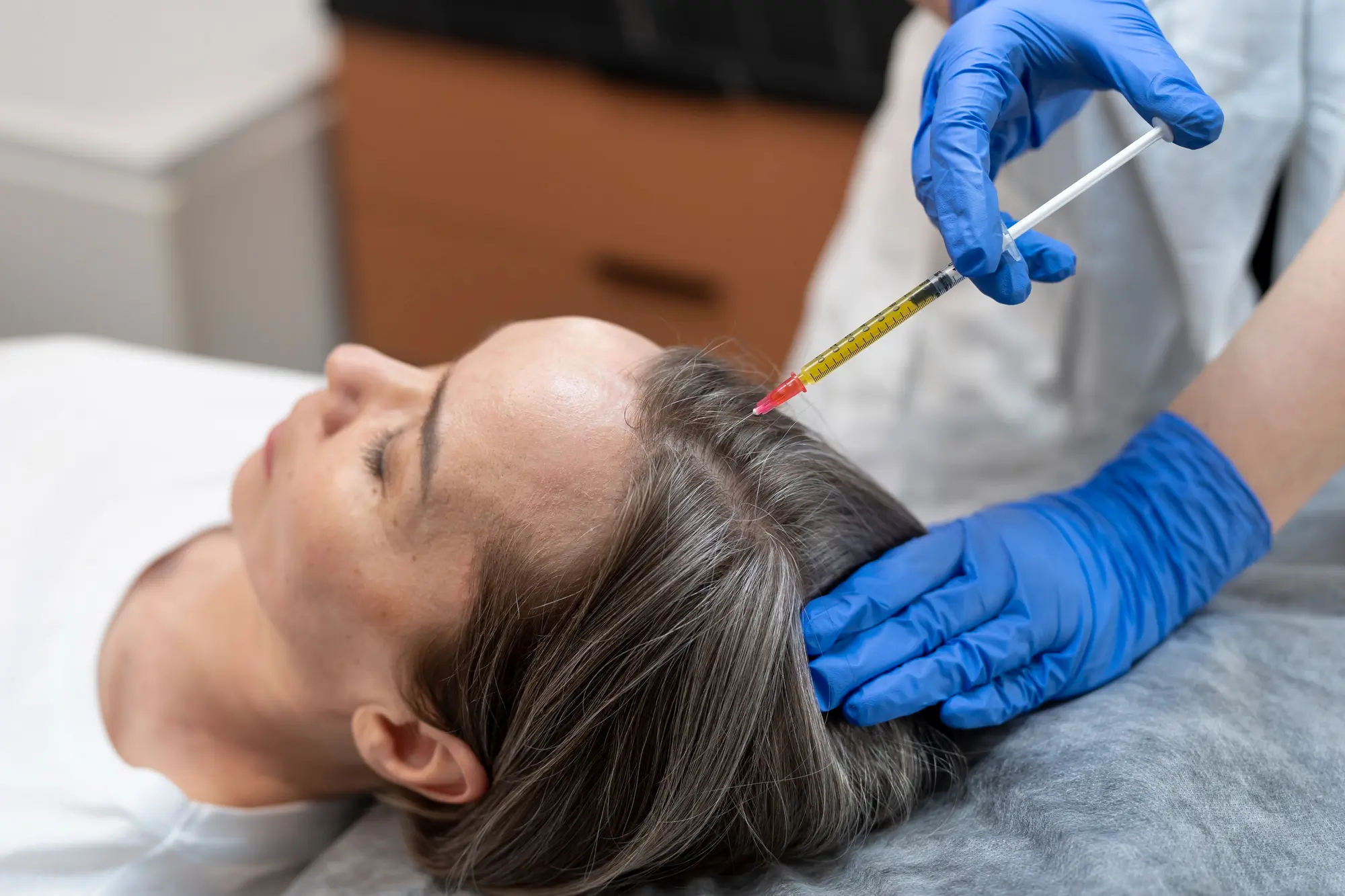
- GFC (Growth Factor Concentrate) sessions: Autologous growth factors from the patient’s own blood — PDGF, IGF-1, VEGF, TGF-β. Studies show up to 35% improvement in hair shaft diameter and significant density increase within 3 months (Alves & Grimalt, Journal of Cosmetic Dermatology, 2016)
- Nutritional correction: Iron, zinc, Vitamin D3, biotin supplementation as indicated by blood panel
Stage 3 — Regrowth & Maintenance (Month 4–12)
Once shedding is arrested, the protocol shifts to reactivating miniaturised follicles and maintaining newly regrown hair:
- Monthly GFC sessions — continued for 6–12 months, then annual boosters
- Continued finasteride + minoxidil with 3-monthly monitoring
- Low-level laser therapy (LLLT) as adjunct — shown to increase hair density by 37% over 16 weeks in randomised controlled trials (Leavitt et al., 2009)
- Scalp health optimisation — medicated shampoos (ketoconazole 1–2%), anti-inflammatory protocols where folliculitis is identified
When Is Hair Transplant Needed Instead?
Medical treatment cannot regrow hair from terminally lost follicles — follicles where the dermal papilla has been replaced by fibrous tissue. Under dermoscopy, this presents as complete follicular dropout (empty follicular units). When a significant portion of the affected area shows terminal loss, hair transplant is the only effective option.
Dr. Vikram’s protocol ensures patients are never pushed prematurely toward surgery. Medical therapy is always maximised first — and transplant is recommended only when it is genuinely the optimal path to restore your hair.
Hair Loss Treatment Cost in Chandigarh
- GFC session (single): ₹2,500–₹3,500
- GFC package (5 sessions): ₹10,000–₹15,000 (included free with NeoDHT® transplant)
- Finasteride + minoxidil (monthly): ₹800–₹1,500 (pharmacy cost; not charged by clinic)
- Consultation with Dr. Nav Vikram: Free
When Hair Loss Protocol Isn’t Enough — Surgical Options
Our hair loss protocol is the ideal first step, but when medical management reaches its limits, NeoGraft offers world-class surgical solutions. Our GFC hair treatment is a powerful non-surgical complement to the protocol. When you’re ready for permanent restoration, our NeoPlatinum hair transplant delivers up to 99% graft survival. Women can find tailored guidance on our female hair transplant in Chandigarh page. Learn how our techniques compare on the DHT & DHI hair transplant page. View real patient before & after results or check hair transplant cost in Chandigarh.
